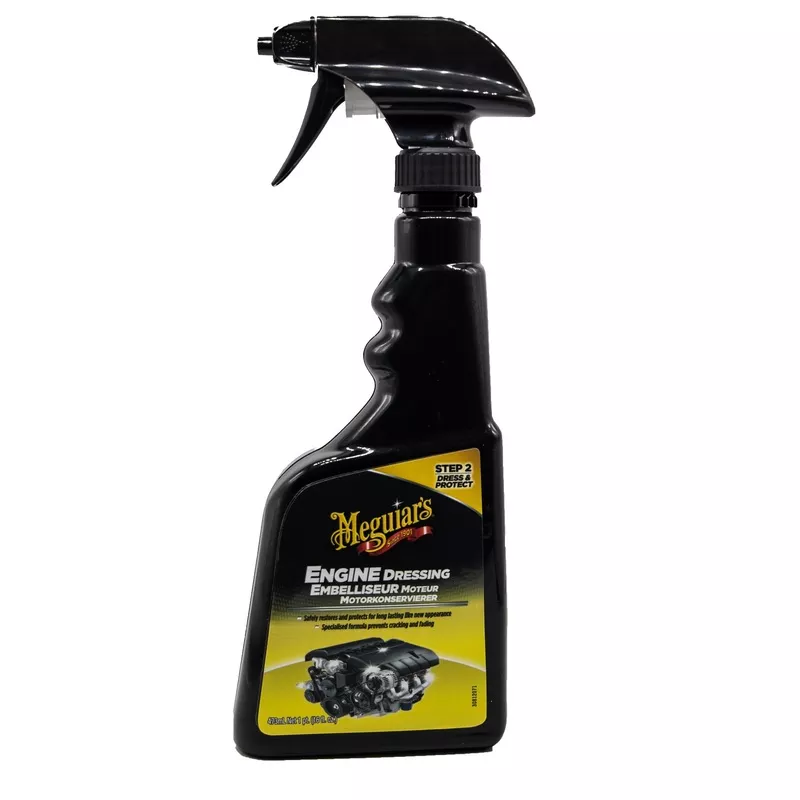
Protect and dress your engine bay with the Meguiar’s Engine Dressing
How do you protect the plastics in your engine bay? The Meguiar’s Engine Dressing seals plastics, hoses and covers under the bonnet with a satin finish and shields them from UV and embrittlement.
After an engine clean the surfaces look clean, sure but they’re left unprotected. The plastic covers, hoses and rubber seals in the engine bay take a real beating: heat, UV, oil mist and moisture. Left bare, they turn brittle, cracked and faded over time. The Meguiar’s Engine Dressing lays down a satin protective film on those surfaces that soaks up UV, shrugs off moisture and locks in the cared-for look of a clean engine bay.
- A satin finish, no fake gloss. The Engine Dressing doesn’t leave that greasy, wet-look shine it gives you a natural, satin finish instead. Plastic parts look like new, not oiled up the pro look detailers and dealers are after.
- UV protection for plastics and rubber. The built-in UV filters keep plastic covers and rubber hoses from fading and going brittle, the long-term damage UV does. Especially handy for cars that sit in the sun a lot.
- Makes the next clean easier. The protective film stops dirt and oil mist from settling straight onto the surfaces. Come the next engine clean, the grime lifts off far more easily something that cuts your upkeep down the line.
Day-to-day from Detailing1: Always lay the Engine Dressing onto a clean, dry engine bay ideally right after cleaning with the Engine Clean, once the surfaces are fully dry. Don’t spray the dressing straight onto the engine; put it on a microfibre cloth or an applicator and work it onto the plastic covers, hoses and frame parts. That way you keep excess off hot metal, where the product could flash off and smoke.
Engine care UV protection and sealing for the engine bay
The Engine Dressing isn’t just a cosmetic product the protection side matters at least as much as the looks. Plastics in the engine bay sit under constant UV, which breaks apart the polymer chains in the material. The result: the plastic turns brittle, loses its flex and starts to crack. Rubber hoses and seals age faster and can start to leak.
The UV filters in the Engine Dressing soak up part of the UV before it reaches the material. That slows the ageing right down. With regular use (after every engine clean, roughly 12 times a year) the plastic parts and rubber pieces stay in good shape far longer.
The protective film has another handy upside: it forms a barrier that keeps oil mist and dust from settling straight onto the surfaces. They land on the film instead, which washes off easily on the next pass with the Engine Clean. That saves time and elbow grease.
Applying engine bay dressing method and technique
The Engine Dressing goes on once the engine bay is clean and fully dry. Spray the product onto a microfibre cloth or a foam applicator and work it evenly over the plastic covers, hoses, cable channels and frame parts. Keep it off hot metal parts like the exhaust manifold or turbo.
Spread the dressing in a thin, even layer. More product doesn’t buy you better protection just a greasy-looking excess that pulls in dust. A thin coat is plenty for full UV protection and that satin finish. Go back over corners and edges with a detailing brush.
Drying time is about 1015 minutes. After that the film is stable and the engine bay is good to go. You can start the engine the heat won’t hurt the film. How long the dressing lasts depends on use, but it typically holds for several months.
Engine bay looks results and the pro finish
The visual result of the Engine Dressing is what really separates a clean engine bay from a cared-for one. Clean on its own often isn’t enough faded plastics still look old and neglected despite the wash. The dressing brings the plastics’ original colour back and gives them an even, satin finish.
For selling a car, a well-kept engine bay is a strong signal: it tells the buyer the whole car has been looked after. That’s why dealers and detailers reach for the Engine Dressing as standard, to make the best possible visual impression. Paired with the Engine Clean as the cleaning step, it’s Meguiar’s engine bay care duo.
The limits show up with permanently damaged plastics: if the material is already deeply embrittled, cracked or faded beyond saving, the dressing can’t bring it back. It slows further decay and improves the looks, but it’s no substitute for replacing badly damaged parts.
Engine care compared Engine Dressing vs. NATURAL SHINE Protectant
Meguiar’s range has two products for plastic care: the Engine Dressing and the NATURAL SHINE Protectant. Both look after plastic, but they’re tuned for different jobs. The Engine Dressing is formulated for the engine bay more heat-resistant, tougher and built for the rough conditions under the bonnet.
The NATURAL SHINE Protectant is made for the interior dashboard, door cards and plastic trim. It gives a natural finish with no greasy shine and packs UV protection for interior plastics. You can use it in the engine bay, but it isn’t ideal for the heat and oil load in there.
Rule of thumb: Engine Dressing for the engine bay, NATURAL SHINE for the interior. The two work hand in hand on a full detail.
Buying engine care who the Engine Dressing is worth it for
The Meguiar’s Engine Dressing is the logical second step after every engine clean. If you clean the engine bay, you should protect it too otherwise the payoff is gone again in a few weeks. The spray bottle makes it quick and easy to use.
Paired with the Engine Clean you get a complete engine bay care duo at a fair price. For professional detailing it’s a standard tool; for the home user, it’s the simplest way to make the engine bay look properly kept.